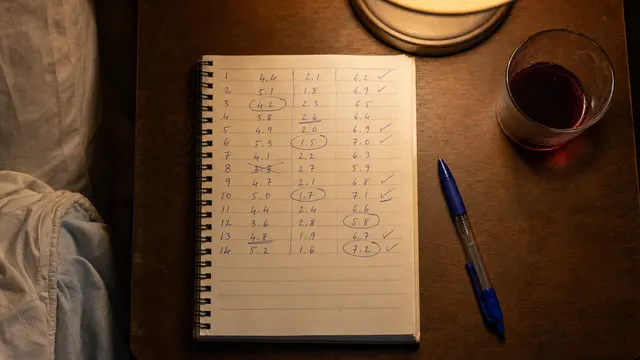
Why you wake up at 3 a.m. every night

Waking at roughly the same time every night is not random, and it is usually not stress. It is what happens when a normal end-of-sleep-cycle surfacing meets a cortisol rise that started too early. You were always going to come close to waking at that point. The question is why you come all the way up and then cannot get back down.
There is a particular kind of frustration in this one. You are not lying awake at midnight unable to drop off. You fell asleep fine. And then your eyes open, you check the clock, and it says something in the low threes for the fourth night this week. Then the mind starts: the electric bill, the thing you said to your daughter, whether the mole on your shoulder was always that color.
Most advice aimed at this problem is really aimed at a different one. Melatonin, the warm bath, the no-screens rule, the tart cherry juice: those are all interventions for sleep onset, the business of falling asleep at the start of the night. If you are already asleep by eleven and awake at three, you have solved the onset problem and are being sold the solution to it anyway.
What is actually happening at that hour
Sleep runs in cycles of roughly ninety minutes, and you surface close to waking at the end of each one. That is normal and it happens to good sleepers too. They just do not remember it, because nothing pulls them fully awake.
Three things converge in the small hours that can turn that brief surfacing into a ninety-minute stretch of ceiling-watching.
Cortisol starts climbing before you want it to
Cortisol is not only a stress hormone. It is also the body's morning signal, and it begins rising in the second half of the night to prepare you to get up. In a settled system it stays low until around 4 or 5 a.m. and then climbs into what researchers call the cortisol awakening response.
Under chronic stress, in perimenopause, and with age generally, that curve can shift earlier and start higher. If cortisol is already climbing at 3 a.m. and you happen to surface between cycles at the same moment, you do not drift back down. You come fully awake with your heart going slightly faster than it should, which the mind interprets as alarm and helpfully supplies a list of things to be alarmed about.
This is why the racing thoughts feel physiological rather than psychological. The thoughts are not causing the wake-up. They are what the mind does with a body that has already been switched on.
Blood sugar dips, and the body sends adrenaline to fix it
Somewhere between three and six hours after your last meal, blood glucose reaches its low point for the night. If it dips far enough, the body corrects with adrenaline and cortisol to release stored glucose. That correction is a wake-up signal.
People who eat dinner early, drink alcohol in the evening, or are on the insulin resistant end of things tend to feel this more. Alcohol is the sharpest version: it knocks you out quickly, then rebounds hard three or four hours later as it clears, which lands almost exactly in the window people complain about.
Body temperature bottoms out and starts to rise
Core temperature falls through the night and reaches its minimum roughly two hours before your usual wake time, then begins to climb. That climb is a waking signal too. For anyone dealing with night sweats or hot flushes, this is often the moment they arrive, and a temperature spike will pull you out of sleep on its own.

Why the melatonin approach usually fails at this specific problem
Melatonin is a timing signal. It tells the body that night has begun. It is genuinely useful for shifting a delayed body clock, for jet lag, and for people who cannot fall asleep at a sensible hour.
What it does not do is keep you asleep at 3 a.m. A standard dose has largely cleared your system by then, and the higher doses that stay around longer bring the grogginess that makes the next morning worse. People notice the middle-of-the-night waking continuing, conclude the dose is too low, and climb from 3 mg to 5 to 10. The waking continues, because it was never a melatonin problem. Only the mornings change, and not for the better.
We went through the dose evidence in detail in why melatonin stops working, including the trial where 0.3 mg outperformed 3 mg. The short version is that more is not better and that tolerance is a real reported pattern.
What is actually worth trying
None of this is a prescription and none of it works for everyone. But these are the levers that address the causes above rather than the onset problem you have already solved.
- Do not look at the clock. This sounds trivial and it is the single most effective thing on this list. Seeing 3:14 starts the arithmetic of how many hours remain, which raises alertness at the exact moment you need it falling. Turn the clock around.
- Move alcohol earlier or drop it. The rebound is reliable and lands squarely in the window. Two nights without will tell you whether it is your driver.
- Test a small protein or fat snack before bed if you suspect the blood sugar route, particularly if you eat dinner early. A spoon of nut butter is the usual suggestion. Give it a week.
- Get the room colder than feels reasonable. Somewhere around 18 °C. Working with the temperature drop rather than against it matters more in the second half of the night.
- Light in the morning, on your face, early. This is the lever that moves the cortisol curve back where it belongs. It is slow and unglamorous and it does more than most things sold in a bottle.
- Get out of bed after twenty minutes. Lying there awake teaches the brain that the bed is a place for being awake. Read something dull in dim light until you feel heavy, then go back.
The awkward truth about this list is that it is all behavior, it is all slow, and none of it is satisfying to read at 3 a.m. when you want the thing that works tonight.
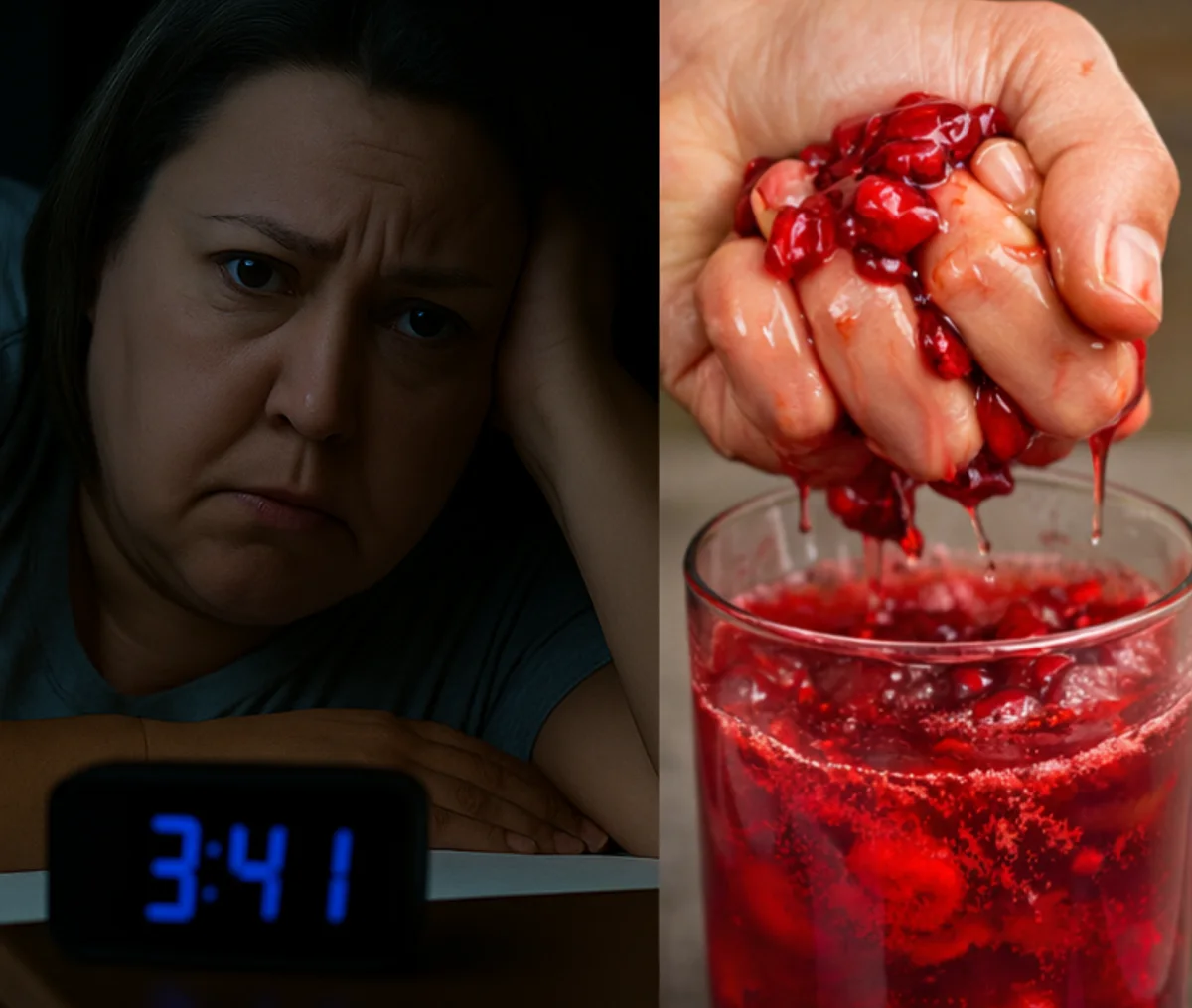 Video · the full account
The version a researcher tells with the charts in front of him
Everything above is what the literature supports. There is a longer account from someone who has spent a career on the physiology of night waking, including the part about adenosine that most sleep advice never reaches.
Watch the presentation →
Free video from an outside source, hosted on their site. It runs long and ends with an offer. We earn a commission if you buy, which does not change a word of what is written above.
Video · the full account
The version a researcher tells with the charts in front of him
Everything above is what the literature supports. There is a longer account from someone who has spent a career on the physiology of night waking, including the part about adenosine that most sleep advice never reaches.
Watch the presentation →
Free video from an outside source, hosted on their site. It runs long and ends with an offer. We earn a commission if you buy, which does not change a word of what is written above.
Common questions
Why is it always almost exactly the same time?
Because the two things setting it are clocks. Sleep cycles run on a fixed length and the cortisol curve runs on your circadian rhythm, so if you go to bed at a consistent hour, the collision point lands in the same place. The consistency is evidence of a rhythm rather than of anything wrong with your character.
Is waking at night always a problem?
No. Brief waking between cycles is normal at every age and becomes more noticeable after 50 as sleep naturally gets lighter. It only counts as a problem if you cannot get back to sleep within twenty minutes or so, or if daytime function is suffering.
Does the 3 a.m. wake-up mean my cortisol is too high?
Not necessarily, and it is not something to self-diagnose. Timing matters as much as amount, and the only way to know your own pattern is testing ordered by a clinician. Plenty of people with ordinary cortisol wake at that hour for the temperature or blood sugar reasons instead.
Will a stronger sleeping pill fix it?
Prescription hypnotics can suppress the waking, and that is a conversation for a doctor rather than a supplement aisle. They carry tolerance and dependency considerations of their own, and they do not address why the wake-up is happening.
Sources
Cortisol awakening response literature, Clemens Kirschbaum and colleagues · Sleep Foundation, middle-of-the-night waking · Cleveland Clinic, insomnia and circadian rhythm · Nocturnal hypoglycaemia and counter-regulatory response reviews · Core body temperature and sleep propensity, Charles Czeisler and colleagues · Alcohol and sleep architecture, systematic review 2018.