How long does tart cherry take to work for sleep?

Give it seven to fourteen days. Almost every trial that found an effect ran at least a week, and the strongest results came from protocols running two weeks or longer. If you judge tart cherry on night one and quit on night three, you are quitting before the studies even started measuring.
This is the single biggest reason people conclude tart cherry "does nothing". They come to it from melatonin, which produces a noticeable drowsy feeling in twenty to thirty minutes, and they expect the same signal. Tart cherry does not work that way, and the mismatch in expectations does more damage than the supplement's actual limitations.
What the trials actually ran
| Study | Duration | What they found |
|---|---|---|
| Howatson et al., healthy adults | 7 days | More total sleep time, better sleep efficiency, higher melatonin markers |
| Pilot study, older adults with insomnia | 14 days | Average 84 minutes more sleep per night |
| Field hockey players, post-exercise | Short-term | Improved sleep quality after intense exercise |
| Adults with overweight/obesity, cherry powder | Weeks | No improvement in sleep or inflammation |
That last row matters, and you will not see it quoted on supplement labels. A well-run trial using a commonly sold dose of Montmorency powder found nothing: no sleep benefit, no inflammation benefit. Any honest answer to "does this work" has to hold both results at once: some trials found a real effect, and at least one good one did not.
Why it is slow: the mechanism explains the timeline
Melatonin in a pill is a direct signal. You swallow the hormone, blood levels rise, your body reads it as night. That is why it is fast, and also why high doses leave you groggy the next morning: the signal is still there when the sun comes up.
Tart cherry does contain melatonin, but at a fraction of a supplement dose: roughly 0.085 mg across a full day of juice, against 1-5 mg in a tablet. That is not enough to explain the trial results on its own. The other pathways are slower ones:
- Tryptophan → serotonin → melatonin. Tart cherries supply tryptophan, which your body converts to serotonin during the day and then to melatonin at night. This is your own production line, not a shortcut past it, and it responds over days rather than hours.
- Anthocyanins. The compounds that make the cherries red appear to influence how quickly your body clears its own melatonin, which is a cumulative rather than immediate effect.
Food-based interventions generally behave like this. You are nudging a system rather than overriding it, and nudges take repetition.
A realistic week-by-week picture
This is a reasonable expectation set from the trial data, not a promise. Sleep responses vary enormously between people, and some people get nothing at all.
Nights 1 to 3
Most likely: nothing obvious. Some people report falling asleep a little easier, but at this stage that is as likely to be the routine (a consistent pre-bed ritual) as the cherry itself.
Days 4 to 7
The window where the seven-day trial started measuring differences. If something is going to shift, this is often where people first notice it: fewer wakeups, or getting back to sleep faster after one.
Days 7 to 14
Where the larger effects appeared in the studies. The 84-minute result in older adults with insomnia came from a two-week protocol.
After two weeks
If nothing has changed at all by now, not sleep onset, not night wakings, not how you feel at 10am, it is reasonable to conclude this particular approach is not doing much for you, and to look at dose, format, or something else entirely.
Three things that quietly stop it working
When people run the two weeks and get nothing, these are the usual culprits, and all three are fixable.
- The dose was lower than the trials used. The clinical protocol is two 8 oz servings of juice from concentrate per day, or roughly 480 mg of extract. A splash of cherry juice in the evening is not the same intervention.
- The timing was wrong. Drinking it immediately before bed tends to backfire, because you get up to use the bathroom. Too early in the evening and the effect has faded. Most protocols land 60-90 minutes before bed for the evening serving.
- The product was mostly apple juice. Melatonin and anthocyanin content vary hugely between products. "Cherry flavored" blends, sweetened cocktails and juice-drink mixes can contain a small fraction of what the studies used.
How to tell whether it is actually working
Sleep memory is unreliable. We are notoriously bad at judging our own nights. The trials used objective measures precisely because self-reports were not matching what the instruments recorded. In one study, participants did not report noticing much improvement even though the measurements showed more total sleep.
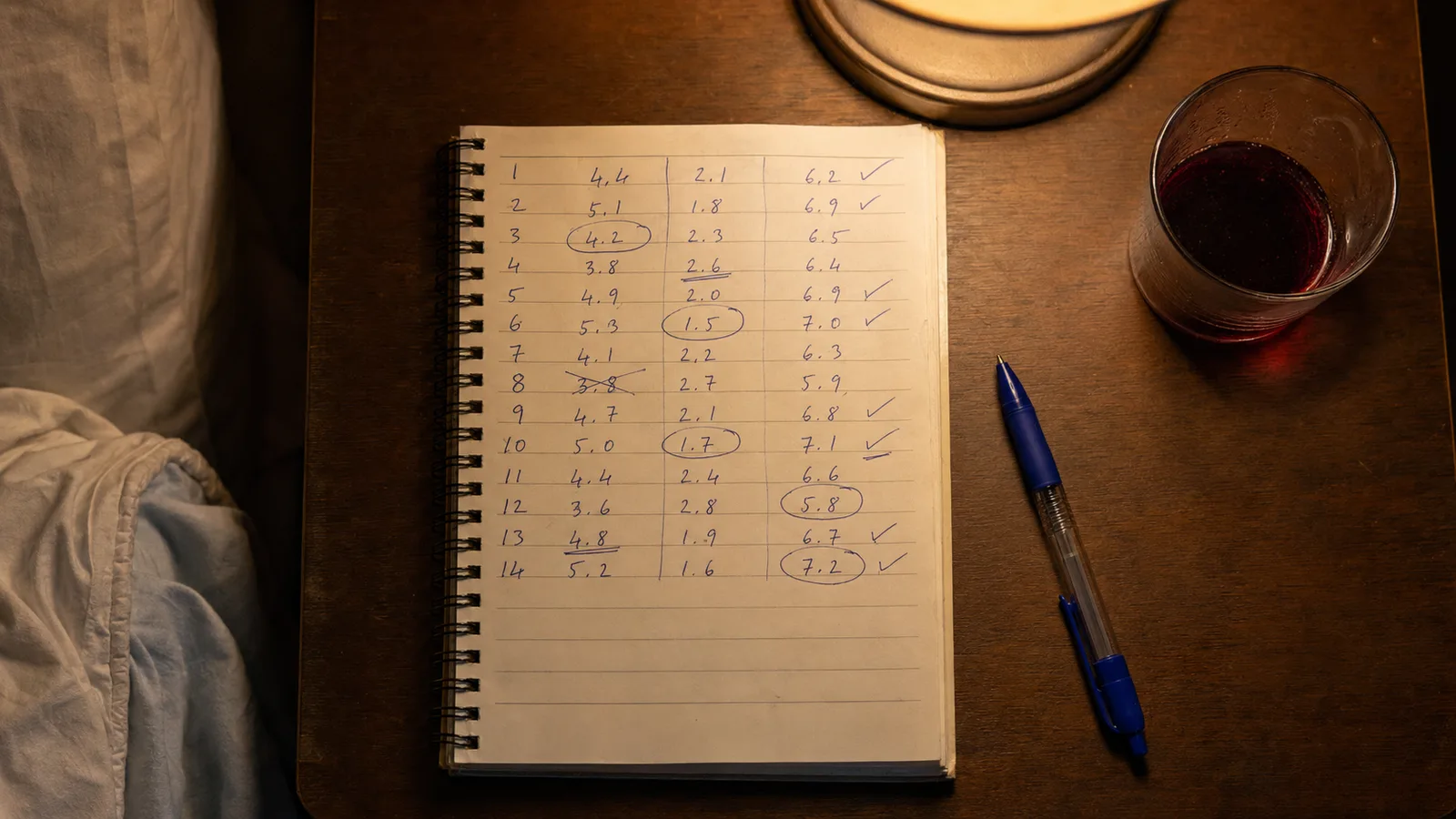
So track something simple and external rather than relying on impressions:
- What time you got into bed, and what time you got up
- How many times you remember waking
- A one-to-five score for how you felt at mid-morning, not on waking
Three numbers, thirty seconds a night, for two weeks. That is enough to see a trend that your memory would miss.
Where the juice version tends to break down
There is a practical reason many people never make it to day fourteen, and it has nothing to do with whether cherry works.
Sixteen ounces of juice a day is a lot of liquid, and the evening half arrives in exactly the window where extra fluid means an extra trip to the bathroom at 3am. It carries real sugar, which adds up daily. It needs refrigeration and it spoils. And because melatonin content varies between brands and harvests, the dose you are getting is not necessarily the dose that was studied.
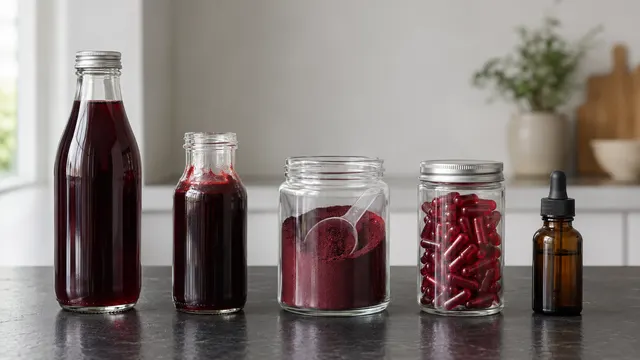
That is the gap concentrated formats are built to close: powders, capsules and liquid drops that carry the cherry compounds without the volume or the sugar, at a dose that stays consistent from bottle to bottle. Whether the premium is worth paying is a separate question, and it depends a lot on which format you are comparing against.
The practical advantage for a two-week trial is that a stated dose does not drift. Whichever format you pick, hold it constant for the full fourteen days or you will not be able to read your own result.
One caveat worth naming before you start counting days. If your problem is not falling asleep but waking in the middle of the night at roughly the same hour, the fourteen-day question may be the wrong one. That pattern has its own cause, and it responds to something different.
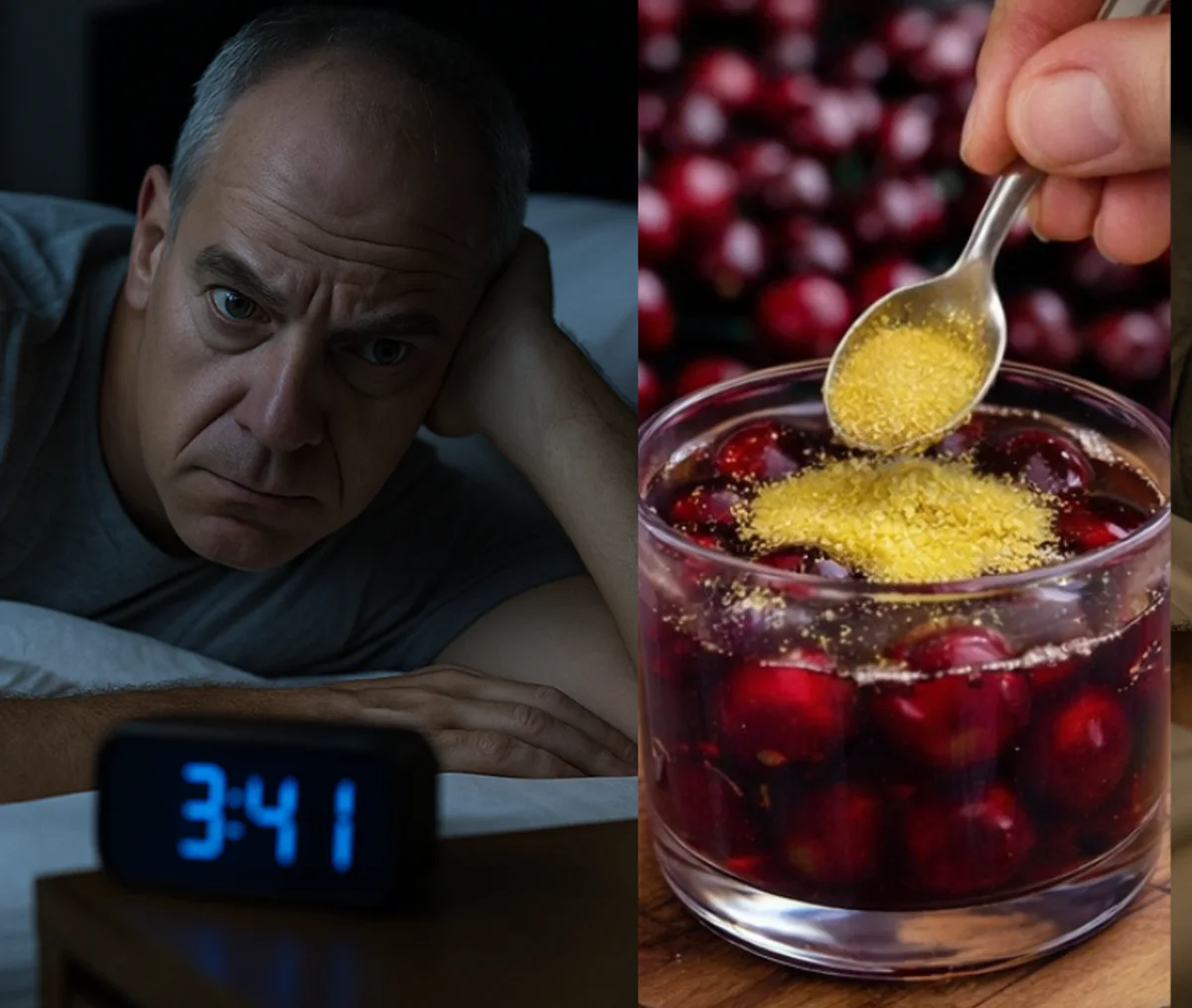 Video · 3:41 a.m.
The wake-up you cannot explain has an explanation
You fell asleep fine. Four hours later you are staring at the ceiling with your heart going. A sleep researcher explains what happens in the second half of the night, and why waiting two weeks for a supplement will not touch it.
Watch the presentation →
Free video from an outside source, hosted on their site. It runs long and ends with an offer. We earn a commission if you buy, which does not change a word of what is written above.
Video · 3:41 a.m.
The wake-up you cannot explain has an explanation
You fell asleep fine. Four hours later you are staring at the ceiling with your heart going. A sleep researcher explains what happens in the second half of the night, and why waiting two weeks for a supplement will not touch it.
Watch the presentation →
Free video from an outside source, hosted on their site. It runs long and ends with an offer. We earn a commission if you buy, which does not change a word of what is written above.
Related reading
We compared the formats directly in tart cherry extract vs juice, including which ones state a dose you can actually check.
If you are also taking a melatonin tablet, the dose math in can you take tart cherry and melatonin together is worth reading before you add anything.
Common questions
Can tart cherry work on the first night?
Some people report it does. But a single good night proves very little. Sleep varies enormously night to night for reasons that have nothing to do with what you drank. The trial data is about averages over a week or more.
Should I take it every night or only when I sleep badly?
The studies used daily dosing. Taking it occasionally, on bad nights, is not the protocol that produced the results and is unlikely to reproduce them.
Does tart cherry stop working over time?
There is no evidence of tolerance developing the way people describe with melatonin, but the studies have not run long enough to say much about a year of daily use either way.
How long does it take with capsules or extract instead of juice?
Similar. The pathways are the same, so the timeline is driven by the mechanism rather than the format. Concentrated formats mainly solve dose consistency and the volume problem, not speed.
Sources
Howatson G. et al., Effect of tart cherry juice on melatonin levels and enhanced sleep quality, European Journal of Nutrition · Losso J. et al., pilot study of tart cherry juice in older adults with insomnia · Commonly used dose of Montmorency tart cherry powder does not improve sleep or inflammation outcomes, 2024 · The effect of tart cherry on sleep quality and sleep disorders: a systematic review, Food Science & Nutrition, 2025 · Sleep Foundation, tart cherry juice.